We really enjoyed Fisterra, and had a very relaxing time there – with the exception of a short stroll to the lighthouse at the end of the peninsula.
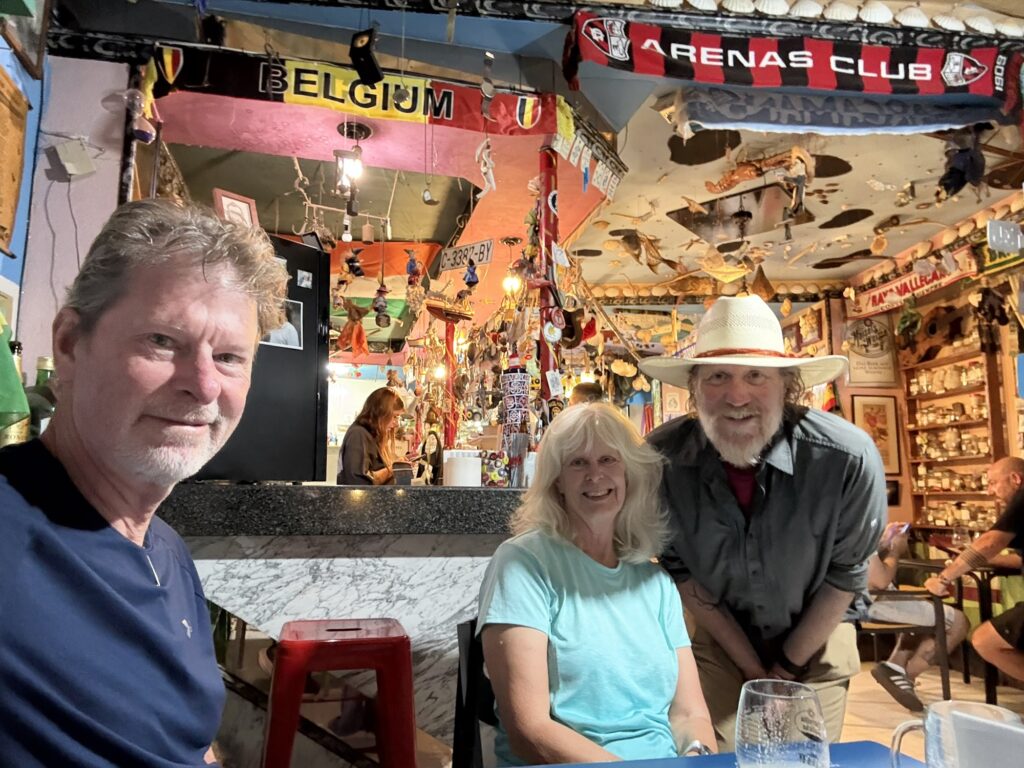
There’s really not too much to the town, but we did find a really cool bar where we spent some of our evenings. A Galaria overlooked the harbor, and had what appeared to be a highly curated selection of old photos, license plates, stickers, bottles, shells, signs, and other memorabilia.
A Galeria seemed to cater a bit to the pilgrim crowd, so there were plenty of folks to talk to while hanging out there. We spent awhile chatting with a fellow, Trevor, who hailed from Austin. Well, he lives in Buda – but that pretty much counts. Trevor was a musician, so we traded stories about the Camino and the music scene in Austin. Good way to spend an evening.
Though it was a small, quiet town, our Fisterra stay felt a bit too short. Another day or two there would have been just fine with both of us.
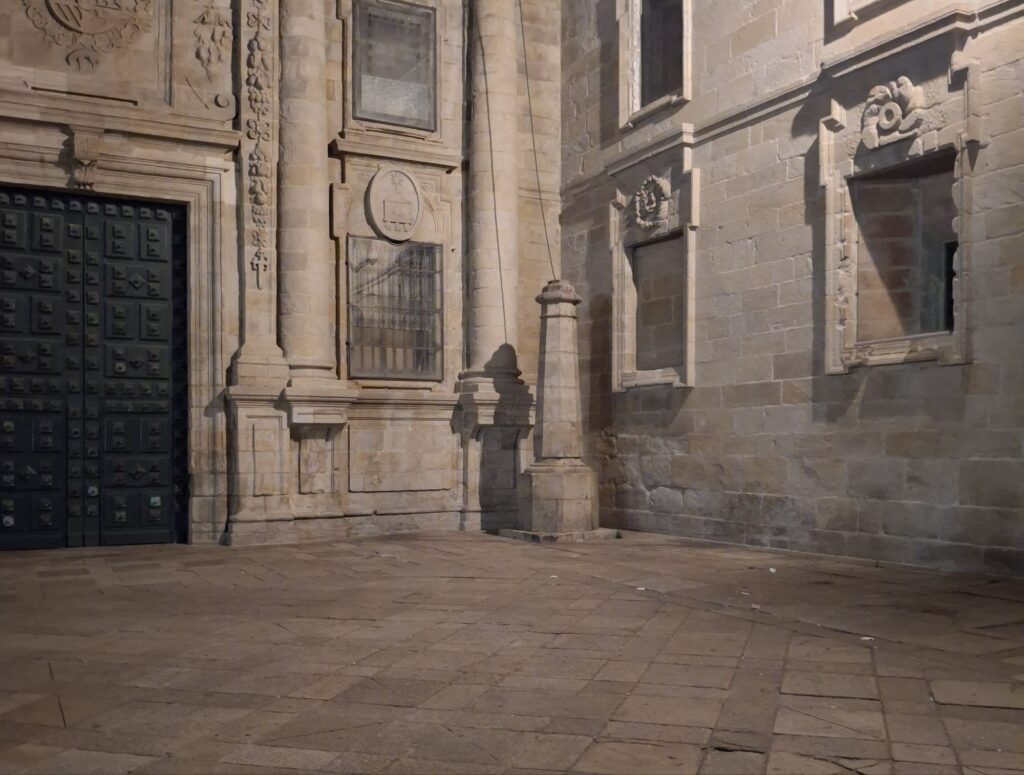
After yet another bus from Fisterra back to Santiago de Compostela we spent a day exploring the Cathedral area in more detail.
Our hotel this time was maybe a block from the church with a balcony overlooking a small square packed with tables from several restaurants. All the charm you can imagine.
We did find the Pilgrims’s Shadow after some searching. It’s a strange coincidence of the position of a light and a stone pillar, but very cool.
We got a chance to do the tourist thing a bit – eating, drinking, shopping, people watching – but Santiago was just a brief layover before we took another bus ride to Lisbon.
Regarding the buses in Spain and Portugal, it does matters which bus you find yourself taking. Some are much more comfortable than others – roomy seats, WiFi, a toilet on board. Others, not so much.
Fortunately, our buses to Lisbon were of the good kind. Not much to say about the ride, except that it took all day. We were pretty shagged when we arrived, so we took a cab to our rented flat in the Alfama neighborhood of Lisbon.
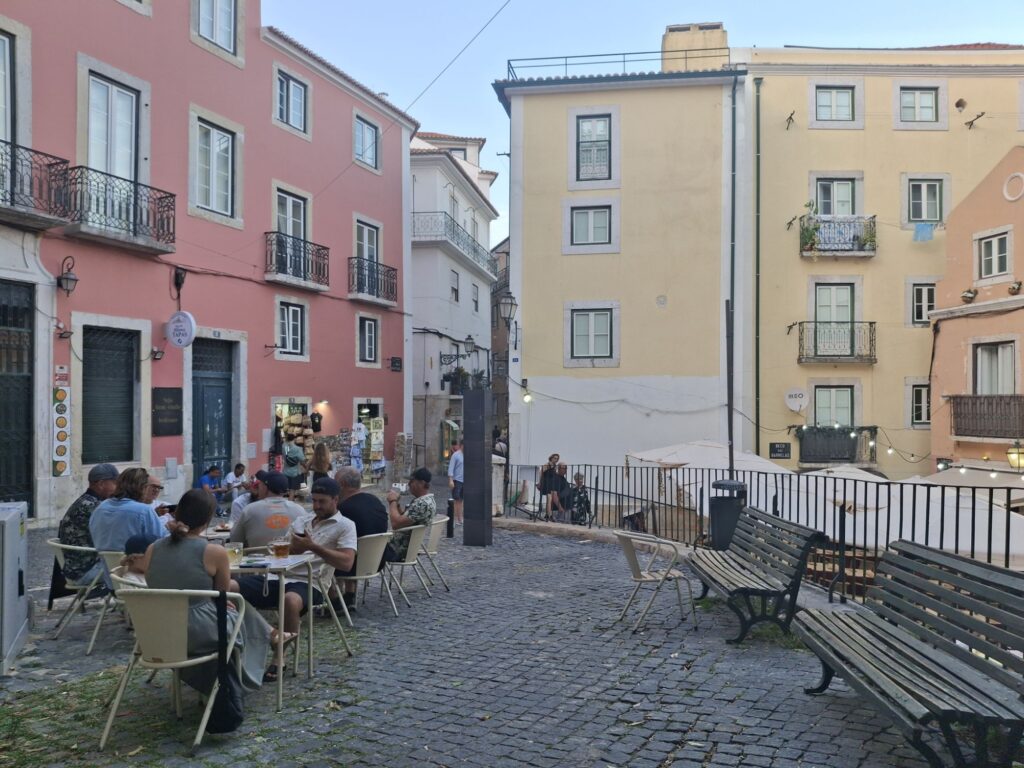
Alfama is an old historic neighborhood with tiny, narrow, winding streets and lots of steep stairways, so for the most part cars aren’t allowed to enter. They make an exception, fortunately, for cabs (but not Ubers or Bolts). They have bollards that block the roads so normal folks can’t enter, but they lower for taxis (and, of course, other authorized vehicles).
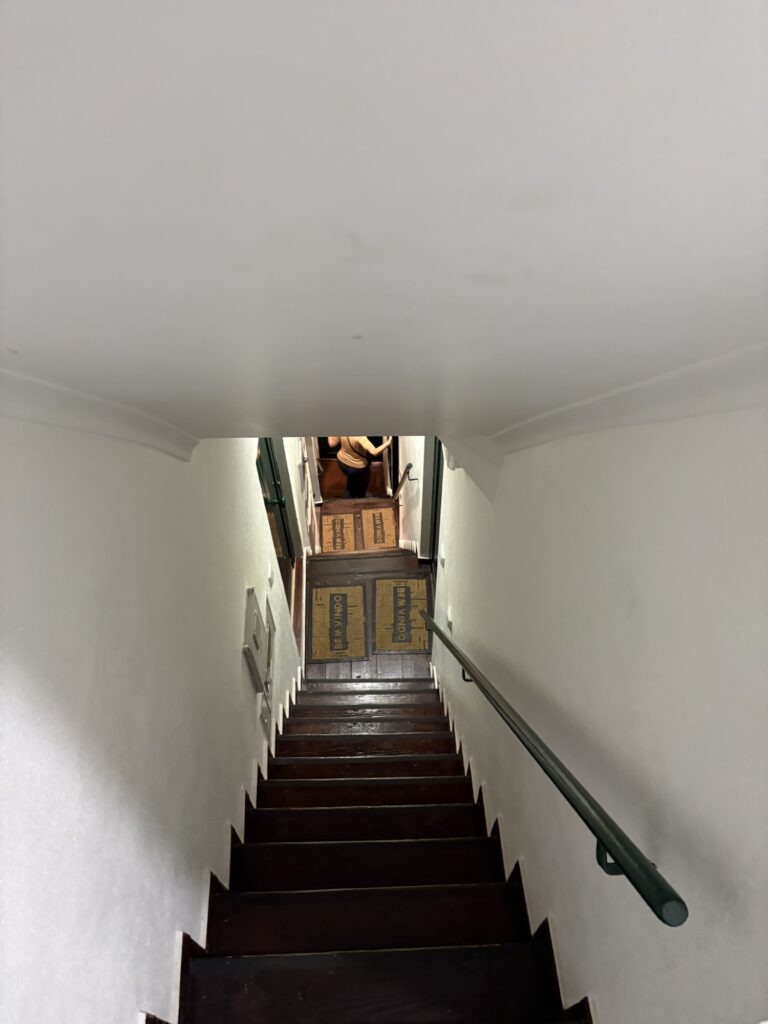
Our apartment is on the third floor (U.S.) in an old building with the craziest staircase. It’s like a ships ladder that you can practically climb on all fours. Apparently, crazy stairs are just what the Portuguese do.
The flat doesn’t have AC – apparently just not a thing in this part of the city – but is otherwise great. We’re surrounded by cafes, bars and restaurants and are walking distance to other popular areas of the city. But I guess we do define “walking distance” a little differently than we used to.
We’ve reached that point in the trip where we’re starting to think of home more often. While we’re still enjoying our time here, we aren’t as concerned with filling our days with activities. We’re happy checking out a couple sites, then wandering the old streets to discover what we may. In Lisbon, it’s pretty easy to find the unexpected or surprising around the next corner or on the next block – a store that looks like a circus just arrived in town and dedicated to the glories of sardines, the tiniest alley imaginable that manages to squeeze in a couple of chairs for a cevejaria, or a beautiful (often times surreal) mural.
We’ve done a lot of walking in Lisbon, which can be a challenge. The entire city is built on hills. Supposedly seven, but that has got to be an underestimate. Steep slopes of cobblestones or the white limestone used for sidewalks (when they exist), made even more treacherous when sand is dumped on them and swept into the crevices. You can often find a set of stairs for a shortcut, but as the treads of the steps are usually sloped as well take them at your own risk.
The hills are enough of a factor that occasionally–but not often enough–there will be an elevator to get you to the top. Luckily our Camino training has helped.
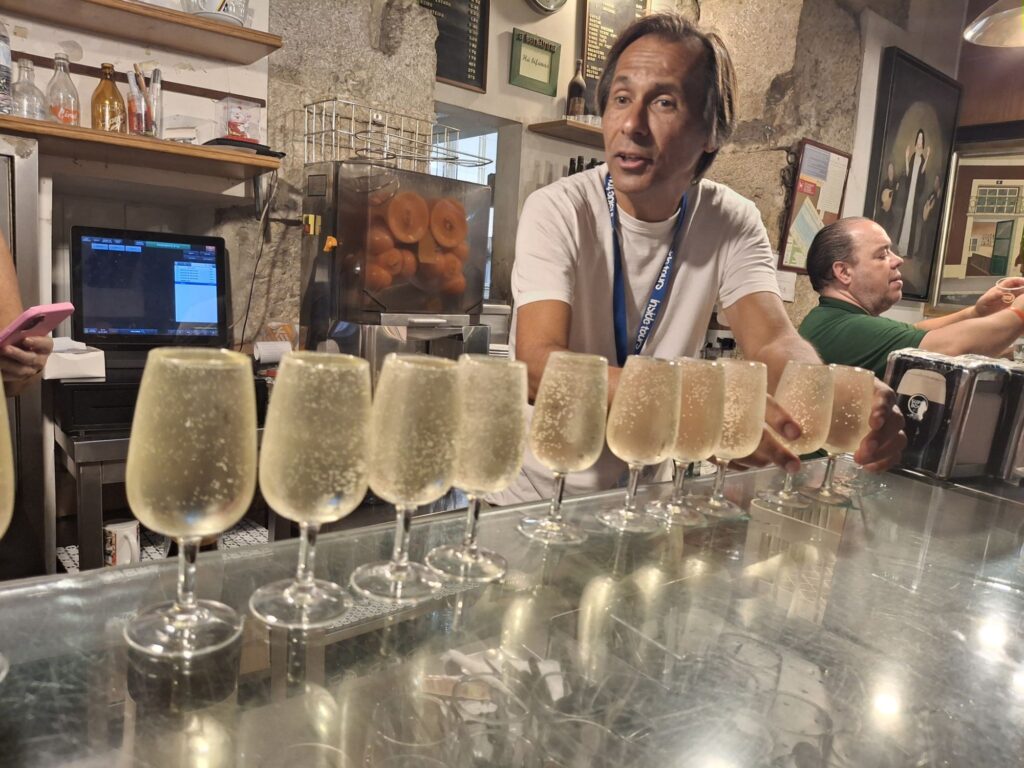
We’ve taken a couple of tours. The first was a food and drinks tour involving wine, port, beer, sardines and something called ginjinha which is essentially cherry cough syrup (seriously, it was first created as a cough medicine). We thought about getting a bottle to bring home until we tasted it. Sorry, BG friends but no ginjinha for you.
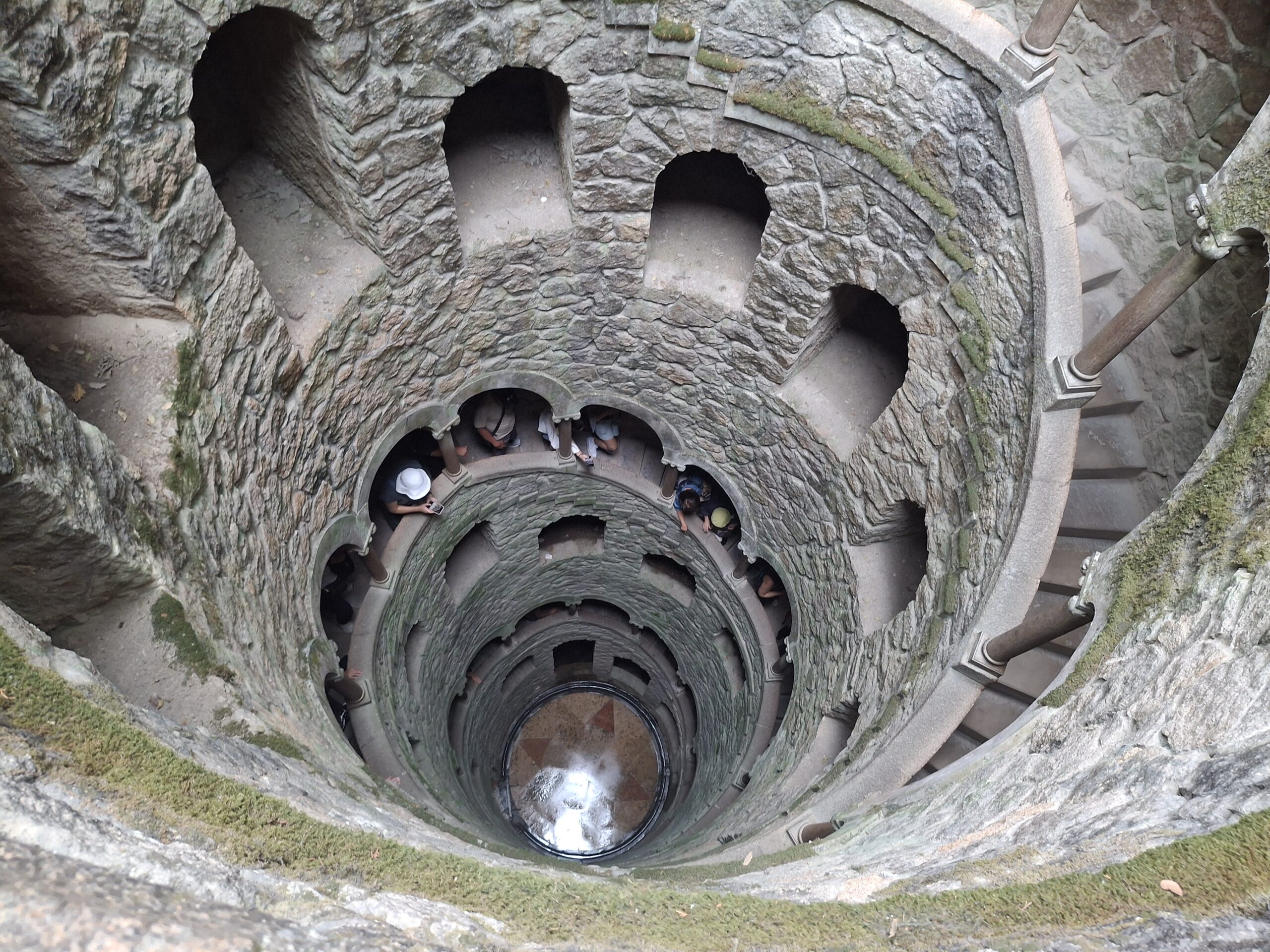
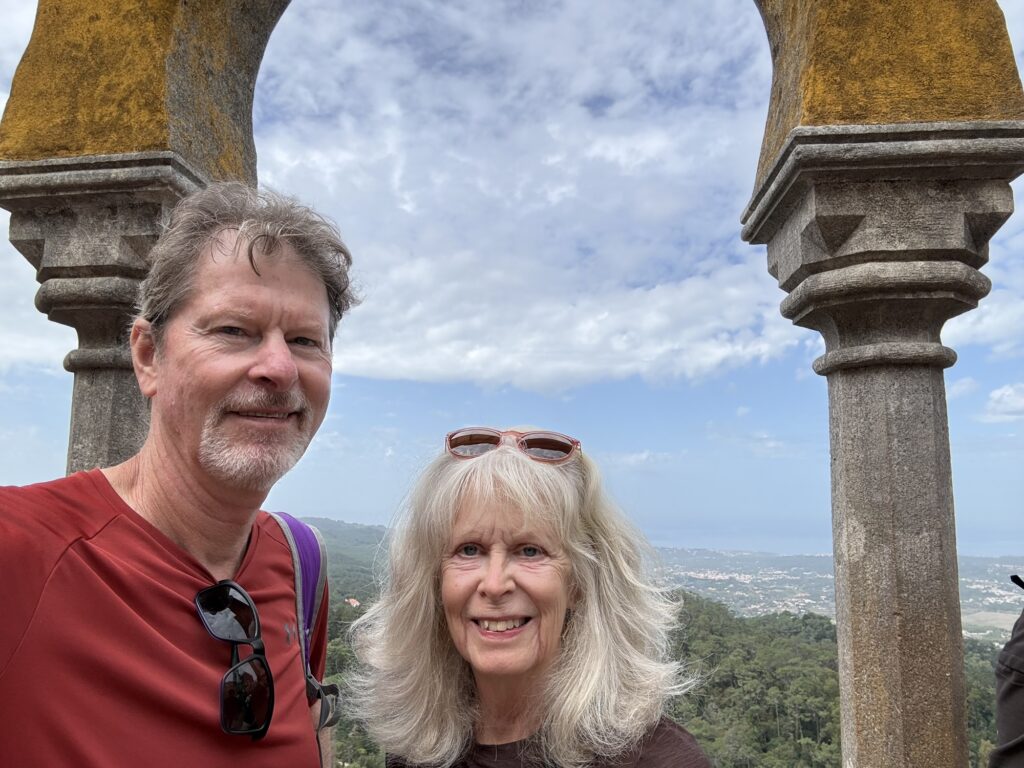
We also took a bus tour to Sintra, a nearby city with the Pena Palace and the Quinta de Regaleira. The former had great views, but otherwise wasn’t all that impressive, and the much cooler Quinta da Regaleira—with tales of human sacrifice, orgies and creepy sculptures to go along with it—where we could have spent the better part of a day exploring that place – but only had a couple hours.
We probably wouldn’t do a bus tour like that again – it seemed rushed, with not enough time focused on the really cool stuff. If we had it to do over again, we might have gone on a small group tour focused on Quinta da Regaleira, spent some time wandering the town center of Sintra, and just skipped the Pena Palace.
But that is part of traveling and exploring – you don’t know what you’ll find until you go and check it out. And, all in all, Lisbon has been a delight.


No comments! Be the first commenter?